
Share:
Enterprise standardisation is now essential for health services to scale safer, connected and sustainable care across every site.
Health systems across Australia and New Zealand are under persistent strain. Rising patient complexity, chronic workforce shortages and widening inequities across metropolitan, regional and rural services continue to place pressure on clinical teams. A more critical challenge lies in structural issues: fragmented workflows, inconsistent digital maturity across sites and an acceleration of technology investment that often lacks a cohesive enterprise strategy.
Australia’s health system remains “a complex mix” of providers and organisations, with significant variation in models of care and digital capacity across the sector. In 2022 the health workforce represented 5% of the total employed workforce in Australia, with over 688,000 registered healthcare professionals working in their field. Yet this sizeable workforce often operates within inconsistent or fragmented digital environments. Even where individual sites demonstrate strong innovation, the lack of a unified digital foundation makes it difficult for teams and networks to scale improvements, integrate workflows and sustain meaningful change.
A platform-based approach in healthcare transformation/digital healthcare, built on enterprise standardisation, has therefore become central to modernisation.
The power of standardisation across the network
Standardisation is often misunderstood as a constraint. In reality, it is one of the most powerful enablers of clinical excellence. Variation in tools, workflows and communication channels increases cognitive load, slows decision-making and raises the risk of communication failures – which is one of the most common contributors to adverse events. The National Safety and Quality Health Service Standards (NSQHS) emphasise the need for organisation-wide systems capable of supporting effective communication and integrated governance.
A unified enterprise platform eliminates the inefficiencies of bespoke system design. Clinicians interact with a consistent interface and a standardised set of workflows across all sites, enabling rapid competency development and improving continuity of care. For multi-facility networks, from tertiary hospitals to satellite services, this also means predictable onboarding, shared learning resources and a more stable environment for workforce mobility.
At scale, standardisation becomes not just a technology decision but a deliberate quality-and-safety strategy.
Connected capabilities and scalability
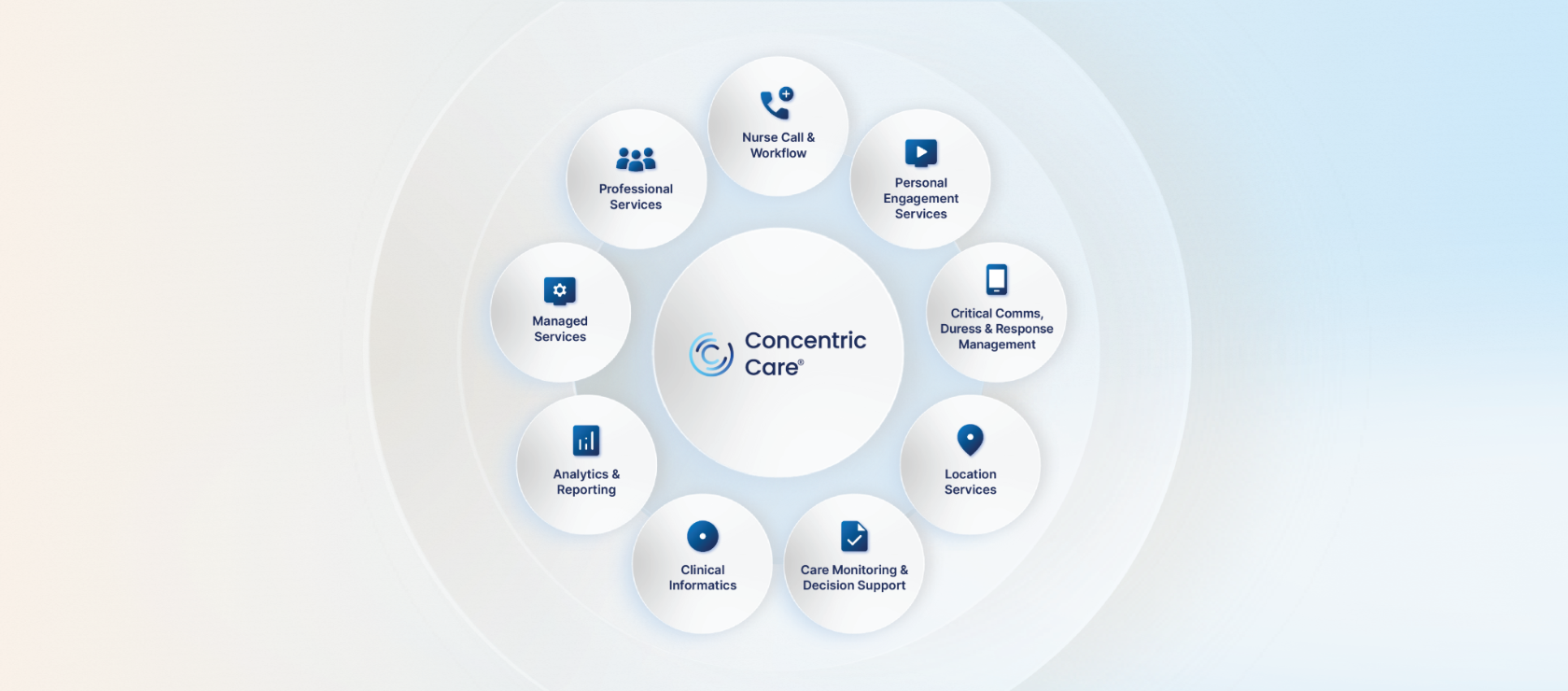
The true value of an enterprise platform emerges when systems speak to one another. Connected capabilities, spanning EMR interoperability, patient monitoring, real-time location systems (RTLS) and event-driven workflow automation, ensure that critical information is delivered to the right person at the right moment.
In fact, the National Healthcare Interoperability Plan (2023-2028) calls for the adoption of standardised data structures and clinical terminologies to facilitate reliable information exchange across systems. Therefore, when healthcare originations must adopt a future-ready approach.
A scalable platform architecture provides a stable and replicable blueprint that enables establishment of new sites, refurbishment of existing infrastructure and regional expansions. This further accelerates time-to-value, safeguards quality and minimises disruption to clinical teams.
Most importantly, it positions the organisation to grow without accumulating digital debt, a critical differentiator in a sector evolving faster than funding cycles can keep pace.
Operational and financial value that compounds over time
Evidence from Australia shows that the health workforce grew 37% between 2013 and 2022 (an increase of approximately 184,000 registered health professionals). This underlines the scale of workforce expansion and the need for efficient systems to support it.
These efficiencies compound over time: lower training overheads, fewer workflow variations, reduced incident rates and streamlined maintenance across the solution lifecycle.
From a financial perspective, health services gain sustained ROI through automation, improved staff utilisation and reduced duplication of effort. As demand continues to outpace workforce capacity, thoughtfully designed, technology-enabled workflows will continue to streamline tasks, conserve clinical time and support staff wellbeing – all while empowering clinicians to make timely, informed decisions.
Sustainability at core
An enterprise-level platform implementation can also advance sustainability by embedding responsible design across the entire digital ecosystem – from low-power communication systems to future-ready data cabling infrastructure built with recyclable materials, minimal-waste installation practices and upgradeable pathways that prevent unnecessary replacement.
Silent alarm design, durable hardware and digital integration further cut energy use, paper waste and resource consumption. Combined, these measures materially reduce the organisation’s carbon footprint by lowering energy demand and avoiding the emissions associated with repeated manufacturing, transport and disposal. Critically, sustainable procurement, lifecycle maintenance and compliant end-of-life recycling ensure health services minimise e-waste and avoid accumulating environmental and operational debt as they scale.
Resilient, cyber-secure by design
Resilience is no longer optional. With cyber-threats escalating and system dependency increasing, health services require environments that can withstand disruption while maintaining continuity of care. Standardisation strengthens resilience by creating a predictable, maintainable and secure architectural baseline.
The Office of the Australian Information Commissioner reported more than 1,100 notifiable data breaches in 2024, a 25% increase from 2023, with malicious and criminal attacks accounting for 69% of notifications in the second half of the year.
The NSQHS Standards reinforce the need for robust risk-management and organisation-wide governance. A standardised enterprise platform allows consistent implementation of access controls, patch management, audit logging, redundancy and fail-over mechanisms. Instead of securing dozens of unique systems, organisations focus on securing one, rigorously.
The road ahead
For health leaders across Australia and New Zealand, the path forward is clear. The fragmentation that once seemed manageable is now a structural handicap. Enterprise standardisation, supported by a connected, scalable and cyber-secure platform, offers a strategic route to lifting capability across the system.
The health services that thrive over the next decade will be those that invest in cohesive, enterprise-wide foundations that enable them to scale better care – consistently, reliably and sustainably. Discover how Responder Enterprise enables healthcare organisations to operationalise this transformation: https://rauland.com.au/responder-enterprise/
Share:
Related Content
- 21 May 2025
- 5 min read
Transforming Perioperative Efficiency with Advanced Nurse Call Solution
Operational efficiency, staff satisfaction and better patient care through automated workflows and smart communications in perioperative care.
- Rauland
- 8 April 2025
- 5 min read
Jacqueline Leeds Appointed as New CEO of Rauland Australia and New Zealand, Ready to Drive Digital Health Innovation
We are delighted to announce the appointment of Jacqueline Leeds as Chief Executive Officer to lead Rauland Australia and New Zealand’s next phase of growth.
- Rauland
- 3 March 2025
- 5 min read
Transforming Outcomes by Advancing Sustainable Health
Steve Gomes, Managing Director of Rauland Australia and New Zealand, explores the evolving landscape of digital health and how technology continues to redefine healthcare services.
- Rauland
- 21 May 2025
- 5 min read
Transforming Perioperative Efficiency with Advanced Nurse Call Solution
Operational efficiency, staff satisfaction and better patient care through automated workflows and smart communications in perioperative care.
- Rauland
- 8 April 2025
- 5 min read
Jacqueline Leeds Appointed as New CEO of Rauland Australia and New Zealand, Ready to Drive Digital Health Innovation
We are delighted to announce the appointment of Jacqueline Leeds as Chief Executive Officer to lead Rauland Australia and New Zealand’s next phase of growth.
- Rauland
- 3 March 2025
- 5 min read
Transforming Outcomes by Advancing Sustainable Health
Steve Gomes, Managing Director of Rauland Australia and New Zealand, explores the evolving landscape of digital health and how technology continues to redefine healthcare services.
- Rauland