


Share:
Enterprise standardisation is now critical to overcoming fragmented systems, enabling scalability and driving sustainable transformation across complex healthcare environment.
Across Australia and New Zealand, healthcare leaders face sustained pressure to expand capacity amid population growth and rising clinical acuity, while navigating ongoing workforce constraints and accelerating digital complexity.
In large, multi-site health systems, these pressures rarely stem from a single failure point. Instead, they accumulate over time as fragmented communication tools, inconsistent escalation practices and duplicated infrastructure introduce operational friction into everyday care delivery. For healthcare executives, this fragmentation represents not only an efficiency challenge, but a material risk to safety, workforce sustainability and long-term digital maturity.
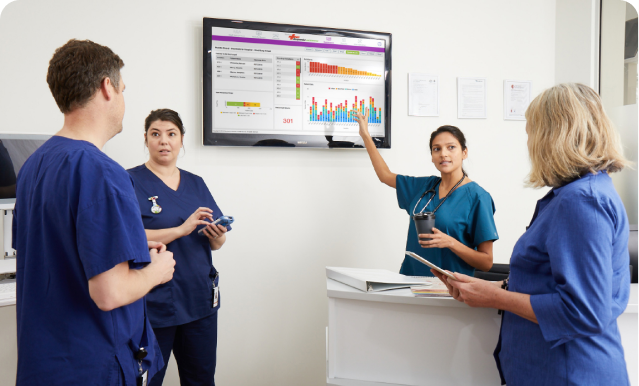
In many environments, clinicians spend a significant portion of each shift coordinating tasks across disconnected systems; placing calls, managing alarms, navigating multiple devices and manually escalating issues when workflows break down. These inefficiencies increase response times, erode situational awareness and add to cognitive load, particularly in high-acuity settings. As demand continues to rise, this operating model does not scale.
Rising complexity demands an enterprise response
Addressing these challenges requires more than incremental upgrades or additional tools. Leading health services are shifting from point solutions toward enterprise-standardised communication and workflow platforms that align clinical practice, governance and technology across entire networks.
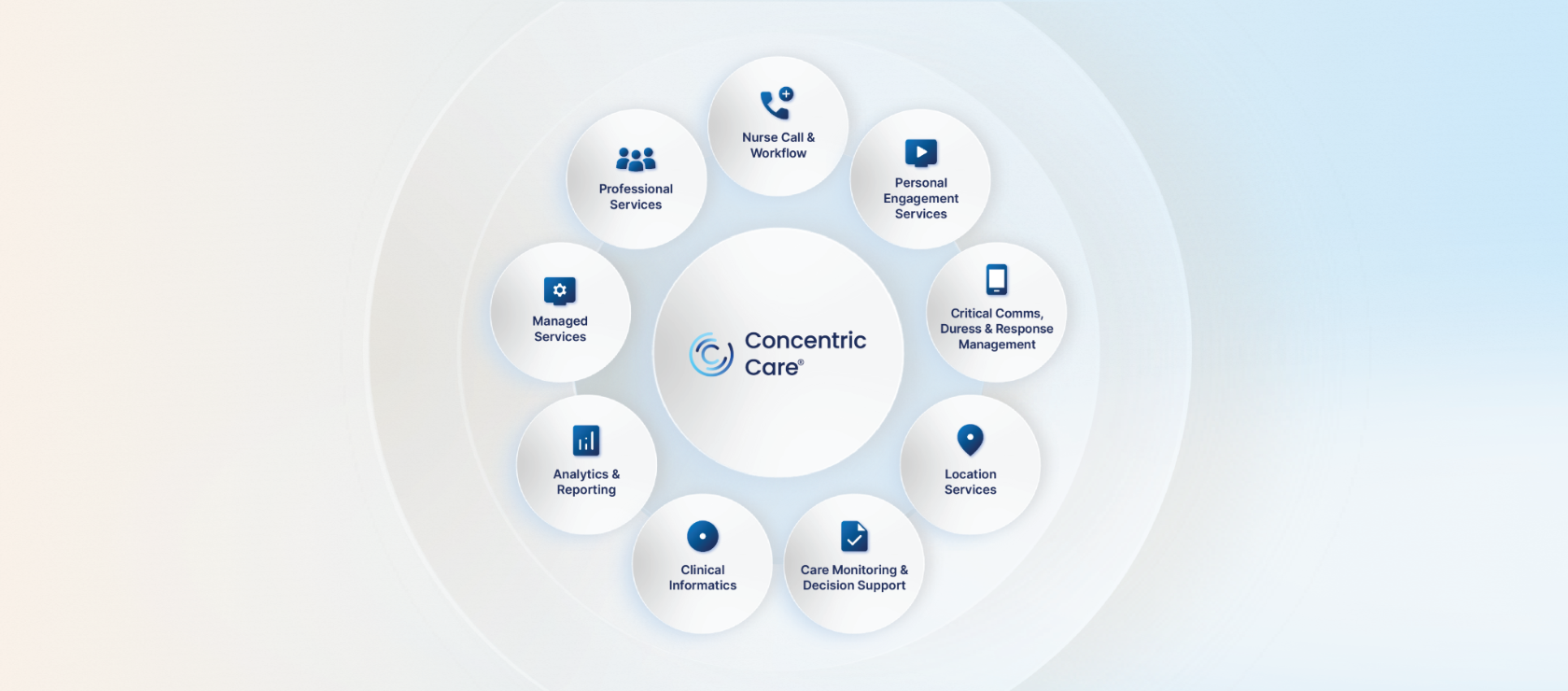
Rather than replacing existing digital investments, an integration-first strategy allows organisations to unify nurse call, mobile messaging and patient engagement while connecting seamlessly with core systems such as electronic medical records, telephony, alarms and real-time location services.
This approach reduces duplication, preserves prior investment and creates a flexible foundation that can evolve as care models and service demand change. Importantly, standardisation at the enterprise level introduces consistency without enforcing uniformity, allowing local clinical practice to be maintained within a governed framework.
Rauland’s Concentric Care Responder Enterprise is designed to support this transformation at scale. Implementations are delivered through structured, staged programmes aligned to redevelopment schedules and operational priorities, spanning multiple hospitals and wards under a single governance model. Consistent configuration standards and clinical co-design ensure workflows are standardised without compromising patient safety or local nuance.
Formal change management and post-go-live optimisation, supported by dedicated clinical consultants, ensure systems continue to reflect real-world clinical demand rather than static design assumptions, protecting long-term value as services expand.
Frontline confidence and sustainability in high-acuity care
For frontline teams, these improvements are experienced as clearer escalation pathways, faster access to the appropriate responder and fewer workarounds during high-acuity events. User experience surveys from comparable enterprise implementations consistently demonstrate improved perceived workflow clarity and increased staff confidence when managing critical situations.
From a sustainability perspective, reducing cognitive load and unnecessary task switching is increasingly recognised as essential to mitigating burnout risk, maintaining clinical performance and supporting retention across complex care environments.
Operational efficiencies and benefits
At the organisational level, enterprise standardisation delivers compounding operational and financial benefits. Standardised workflows and governance reduce variation across sites, simplify training models and enable workforce mobility across hospitals and wards.
In systems reliant on cross-site rotations and flexible staffing models, this consistency strengthens resilience and operational continuity.
Streamlined onboarding further supports sustainable growth by enabling faster, safer expansion across redevelopments, new builds and service extensions without increasing complexity or risk.
Building the future of care with enterprise
Crucially, enterprise standardisation is not only about immediate efficiency – it is a prerequisite for future models of care.
A single, standards-based architecture provides the digital backbone required to support these models while maintaining governance, compliance, cybersecurity and visibility at scale. Ongoing clinical consultancy, benchmarking and optimisation help prevent configuration drift as services evolve, ensuring platforms remain aligned to enterprise objectives over time.
For healthcare leaders, the strategic implication is clear: enterprise-grade clinical communication and workflow platforms are no longer peripheral systems – they are foundational infrastructure. When aligned with strong clinical governance, they reduce operational risk, protect workforce capacity and enable a sustainable pathway to digital maturity.
Health services seeking to understand how these outcomes could translate into their own environments can request a tailored demonstration via https://rauland.com.au/#request-a-demo.
Share:
Related Content
- 17 December 2025
- 5 min read
Rauland Strengthens Leadership to Drive Growth in Aged Care and Acute Care Markets
We’re excited to welcome two key Executive leaders to Rauland Australia and New Zealand as we strengthen our digital health solutions focus across aged care and acute care.
- Rauland
- 12 December 2025
- 5 min read
Scaling better care – Why enterprise standardisation matters
Enterprise standardisation is now essential for health services to scale safer, connected and sustainable care across every site.
- Rauland
- 21 May 2025
- 5 min read
Transforming Perioperative Efficiency with Advanced Nurse Call Solution
Operational efficiency, staff satisfaction and better patient care through automated workflows and smart communications in perioperative care.
- Rauland
- 17 December 2025
- 5 min read
Rauland Strengthens Leadership to Drive Growth in Aged Care and Acute Care Markets
We’re excited to welcome two key Executive leaders to Rauland Australia and New Zealand as we strengthen our digital health solutions focus across aged care and acute care.
- Rauland
- 12 December 2025
- 5 min read
Scaling better care – Why enterprise standardisation matters
Enterprise standardisation is now essential for health services to scale safer, connected and sustainable care across every site.
- Rauland
- 21 May 2025
- 5 min read
Transforming Perioperative Efficiency with Advanced Nurse Call Solution
Operational efficiency, staff satisfaction and better patient care through automated workflows and smart communications in perioperative care.
- Rauland