
- 5 min read
AS 3811:2026: More than a Standard; a blueprint for the future of connected care
Industry
Share:
Standards don’t change very often. Healthcare does.
That’s what makes the release of AS 3811:2026 so significant.
For the first time in almost three decades, Australia’s Standard for hard-wired patient alarm systems has undergone a comprehensive transformation. Not simply to keep pace with technology, but to acknowledge a fundamental shift in how healthcare is delivered – since modern healthcare has moved well beyond an alarm-driven model.
It’s about connecting people, information and workflows to reduce risks and deliver safer, higher quality care .
For many years, communication systems were designed with a singular purpose: allow patients to call for assistance and enable staff to respond. Today, that expectation feels incomplete. Communication platforms now underpin clinical workflows, orchestrate multidisciplinary care teams, integrate with electronic medical records, support mobile clinicians, generate operational intelligence and directly contribute to workforce efficiency and patient outcomes.
The new AS 3811:2026 Standard, ‘Hard-wired consumer communication and alarm systems for use in healthcare facilities’, recognises this evolution by redefining what modern consumer communication systems should enable, not merely what they should do.
It places greater emphasis on interoperability, mobility, analytics, cybersecurity and workflow orchestration, not because they are emerging technologies, but because they’ve become essential capabilities in a modern healthcare environment. While the Standard embraces interoperability, mobility, automation and digital integration, it simultaneously reinforces the importance of hard-wired independence, redundancy and fail-safe operation for core life-safety functions.
Evolution of healthcare communication
Innovation should never come at the expense of resilience. Healthcare is one of the few environments where technology isn’t simply expected to perform, it’s expected to continue performing when everything else doesn’t.
This Standard reinforces this by maintaining the importance of hard-wired life-safety infrastructure while supporting broader digital integration. It recognises that resilience and interoperability are not competing priorities, they are complementary ones.
Another welcome evolution is the way cybersecurity is reframed. Cybersecurity is no longer a peripheral technical matter. It has become a foundational element of safe, modern clinical practice. Cybersecurity is now recognised as a core element of clinical safety, integral to protecting patient information, safeguarding critical communication systems, and ensuring that care environments remain resilient, connected and trustworthy.
A compromised communication platform isn’t merely a technology issue; it has the potential to disrupt clinical workflows, delay response times and ultimately affect patient care. Embedding secure development, identity management and ongoing cyber resilience into the Standard reflects the reality that protecting digital infrastructure is now part of protecting patients.
Perhaps the most important aspect of AS 3811:2026, however, is that it isn’t explicitly about technology.
From alarms to connected care
It’s about creating environments where clinicians can work more effectively, where communication happens seamlessly, where workflows support rather than hinder care. With the standard now extending its guidance to mental health and residential aged care, it’s also about recognising the unique communication, safety and escalation needs of these settings – from managing behavioural risks and ensuring staff duress protection in mental health, to supporting timely, person‑centred responses for residents in aged care. It aims to ensure every patient and resident receives safer and more responsive care, no matter the care environment.
Therefore, AS 3811:2026 places greater emphasis on communication systems designed around the realities of clinical practice. Intuitive interfaces, intelligent visual and audible prioritisation and seamless mobile integration enable clinicians to receive, assess and respond to events more efficiently. Features such as real-time location and in-room situational awareness, including fall and risk event detection, automated presence detection and intelligent alarm escalation ensure the right information reaches the right person at the right time.
This, enables earlier intervention while reducing alarm fatigue and cognitive burden. By aligning technology with clinical workflows through interoperability, mobility and actionable insights, modern communication platforms move beyond basic alarm notification to improve coordination, operational efficiency and, more importantly, better care outcomes.
Built around people, not just technology
That’s why we believe this Standard represents more than an update to technical requirements. It marks a shift in mindset.
It recognises that communication systems are no longer isolated pieces of infrastructure hidden behind hospital walls. They are strategic clinical platforms that influence patient safety, staff experience, operational performance and the long-term digital maturity of healthcare organisations.
Standards rarely tell us where the industry is today. The best ones tell us where it’s heading. AS 3811:2026 does exactly that.
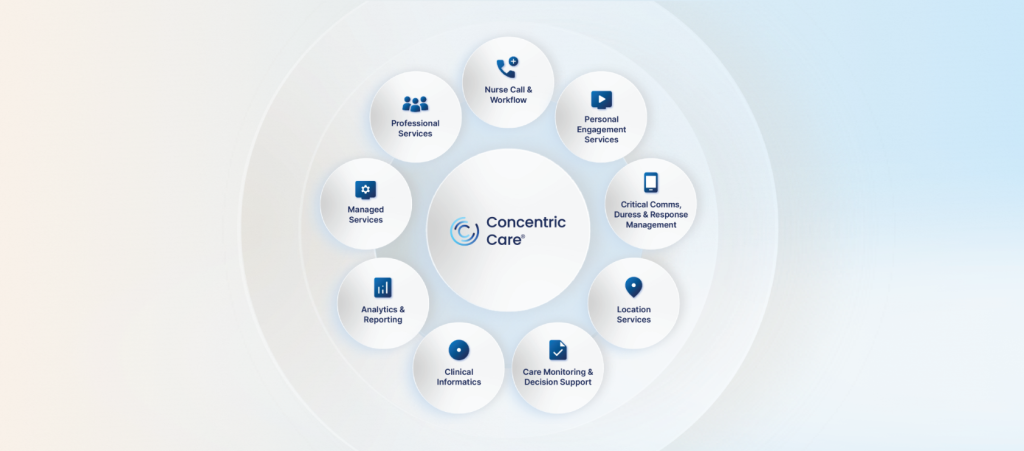
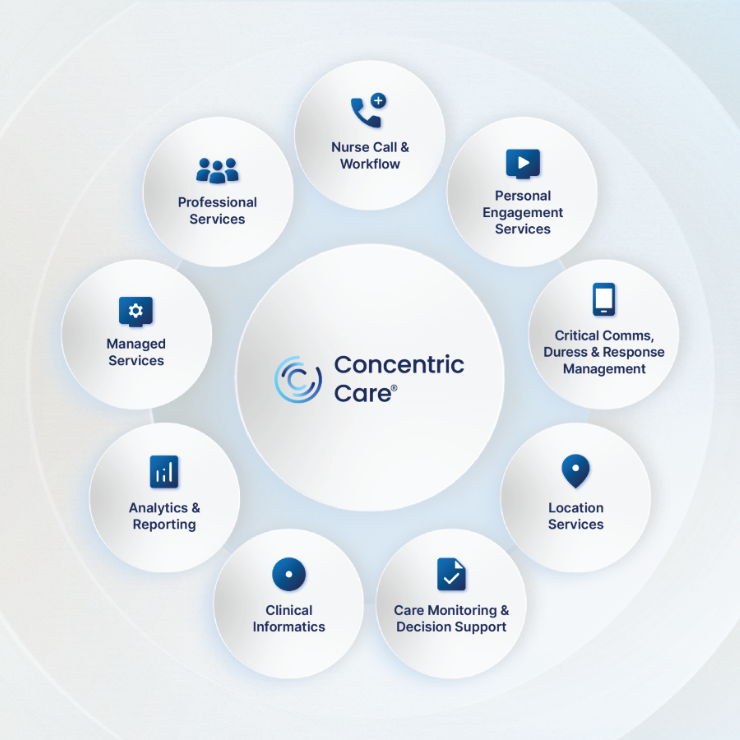
At Rauland, we welcome this evolution because it closely aligns with the direction healthcare has been moving for many years. The principles embedded throughout AS 3811:2026 – connected care, interoperability, cybersecurity, resilience and workflow optimisation, have long shaped the development of our Concentric Care platform.
More importantly, this Standard reinforces something we’ve always believed: the future of healthcare isn’t built around technology. It’s built around helping people deliver better care.
Share:
Related Content
- 25 June 2026
- 40 min watch
Big Ideas, Real Challenges: Highlights from the Healthcare Leaders Breakfast
Conversation with digital and clinical leaders on what it really takes to deliver sustainable healthcare transformation.
- Rauland
- 6 May 2026
- 5 min read
Rauland Australia and New Zealand Unveils Concentric Care Unify at ITAC 2026
Rauland Australia and New Zealand launches a new dedicated aged care platform Concentric Care Unify. The Unify platform is specifically designed to unify messaging, alerts and analytics into one central place simplifying communication, workflows and reporting for residential aged care providers.
- Rauland
- 26 February 2026
- 20 min watch
From Patient Flow to Operational Efficiency: Optimising Workflows at the Enterprise Level
Steve Gomes, Executive Director at Rauland Australia and New Zealand, shares insights on the evolving digital health landscape and the need for enterprise standardisation.
- Rauland
- 25 June 2026
- 40 min watch
Big Ideas, Real Challenges: Highlights from the Healthcare Leaders Breakfast
Conversation with digital and clinical leaders on what it really takes to deliver sustainable healthcare transformation.
- Rauland
- 6 May 2026
- 5 min read
Rauland Australia and New Zealand Unveils Concentric Care Unify at ITAC 2026
Rauland Australia and New Zealand launches a new dedicated aged care platform Concentric Care Unify. The Unify platform is specifically designed to unify messaging, alerts and analytics into one central place simplifying communication, workflows and reporting for residential aged care providers.
- Rauland
- 26 February 2026
- 20 min watch
From Patient Flow to Operational Efficiency: Optimising Workflows at the Enterprise Level
Steve Gomes, Executive Director at Rauland Australia and New Zealand, shares insights on the evolving digital health landscape and the need for enterprise standardisation.
- Rauland